
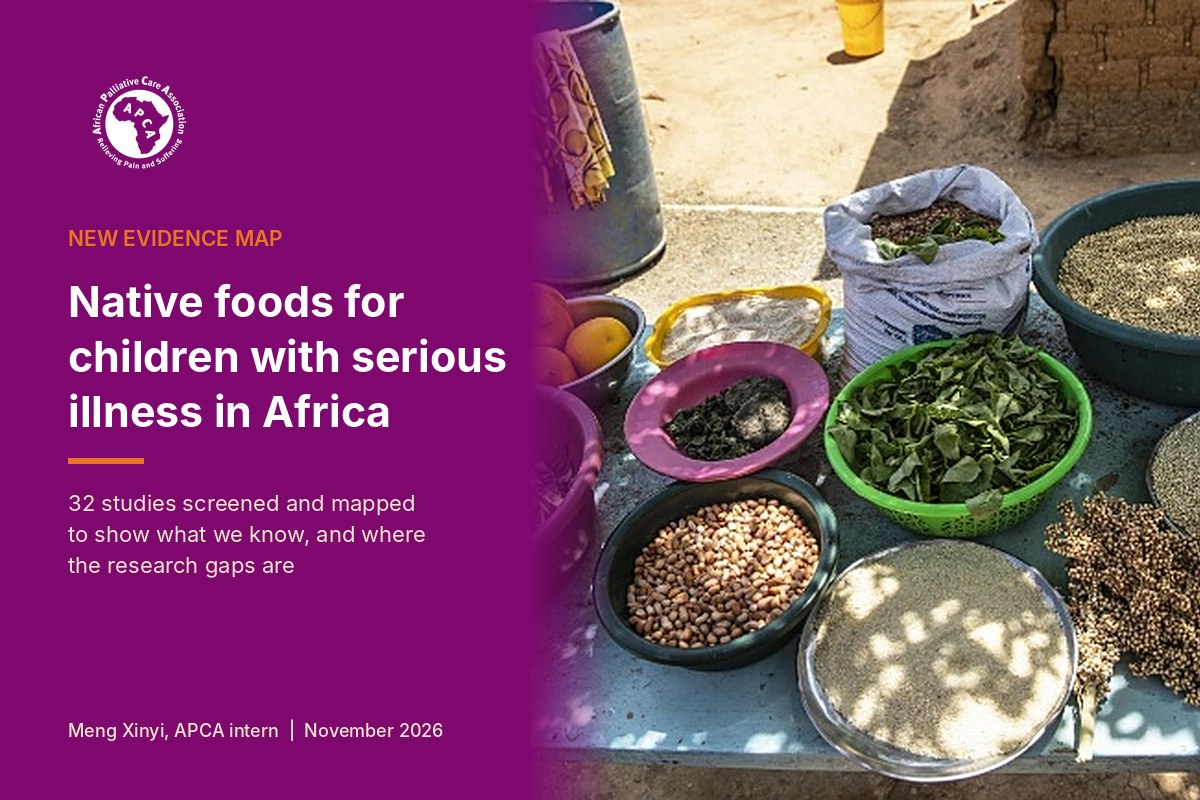
An APCA intern has mapped the research evidence on native and local foods for children living with serious illness. It shows how little we know, and where research should go next.
On 4 November 2026, APCA intern Meng Xinyi presented her final internship project to APCA staff: Mapping Native Therapeutic Food Options for Children Living with Serious Illnesses in Africa: Screening, Data Extraction and Evidence Gap Mapping. Working under the guidance of APCA Executive Director Dr Eve Namisango, she screened the published research, coded 32 studies and built an interactive Evidence Gap Map of what has been studied, where, and with what results.
Why food matters in children's palliative care
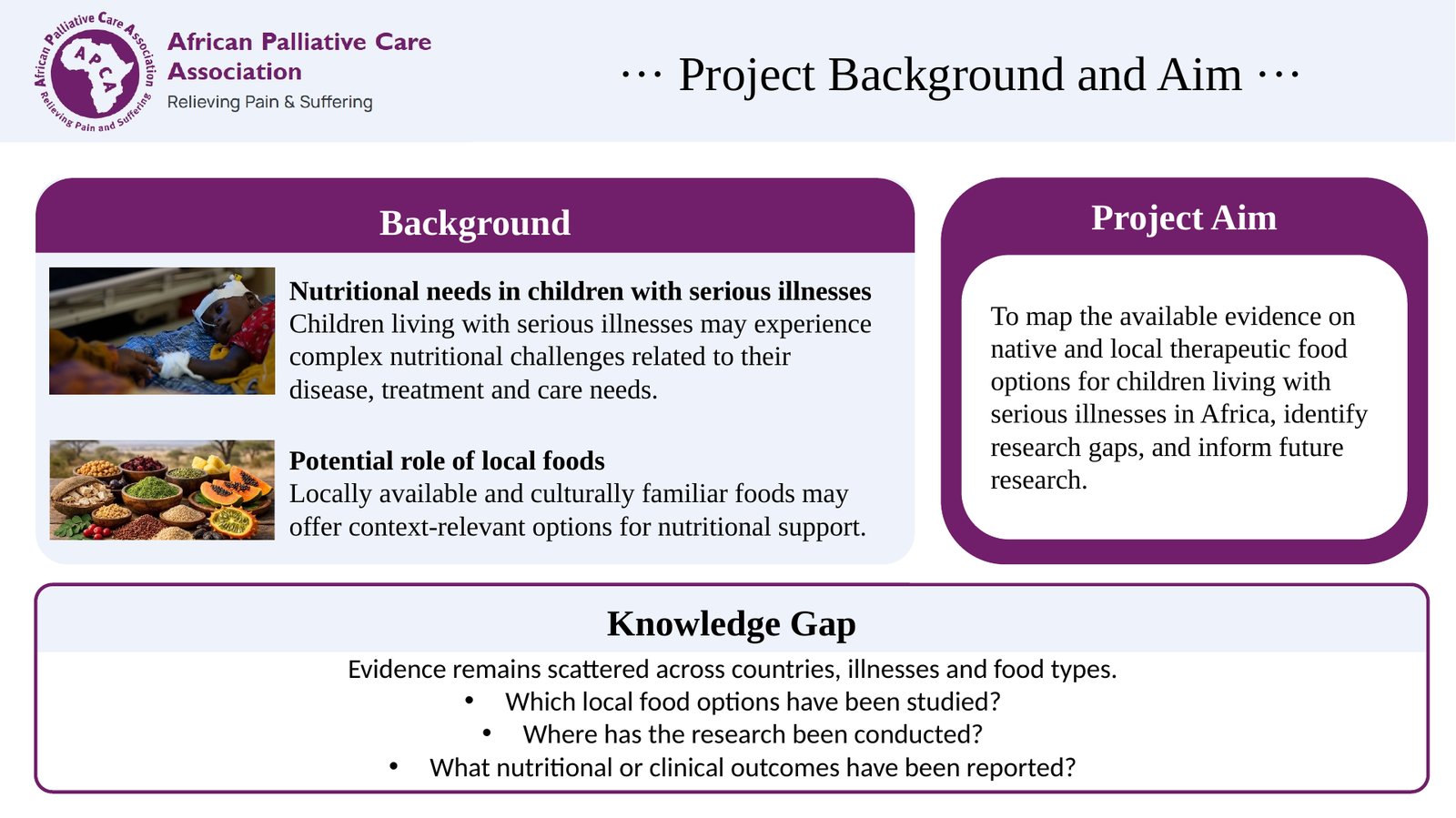
Children living with serious illnesses often face complex nutritional challenges. These come from the disease itself, from its treatment, and from their wider care needs.
Foods that are grown locally and familiar to families could offer practical, affordable and culturally acceptable nutritional support. Yet the evidence on these foods is scattered across countries, illnesses and food types. Nobody had a clear picture of which local foods have been studied, where that research took place, or what nutritional and clinical outcomes it reported.
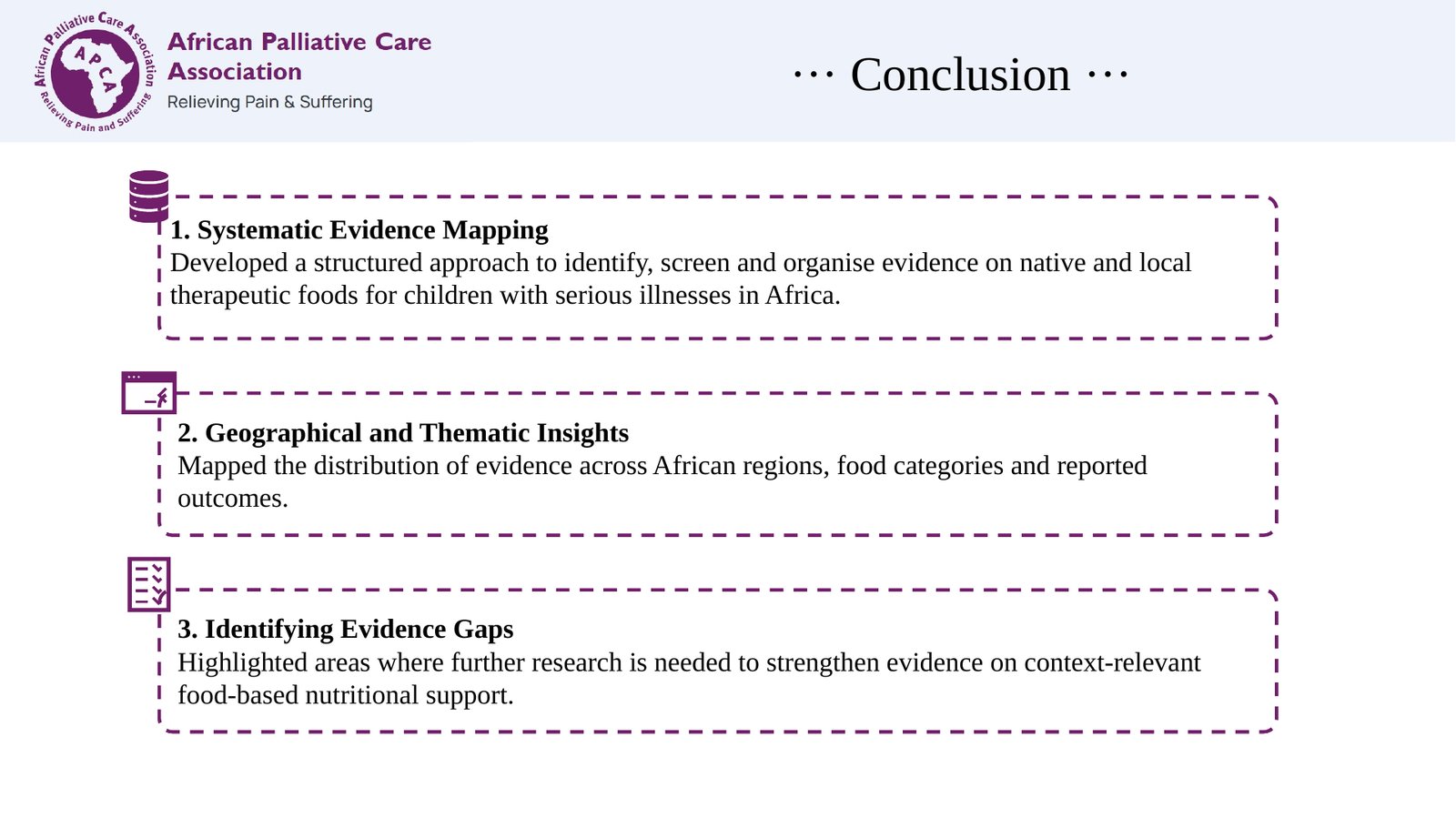
The project set out to change that: to map the available evidence, show where the gaps are, and give researchers and programme teams a starting point for future work.
The question
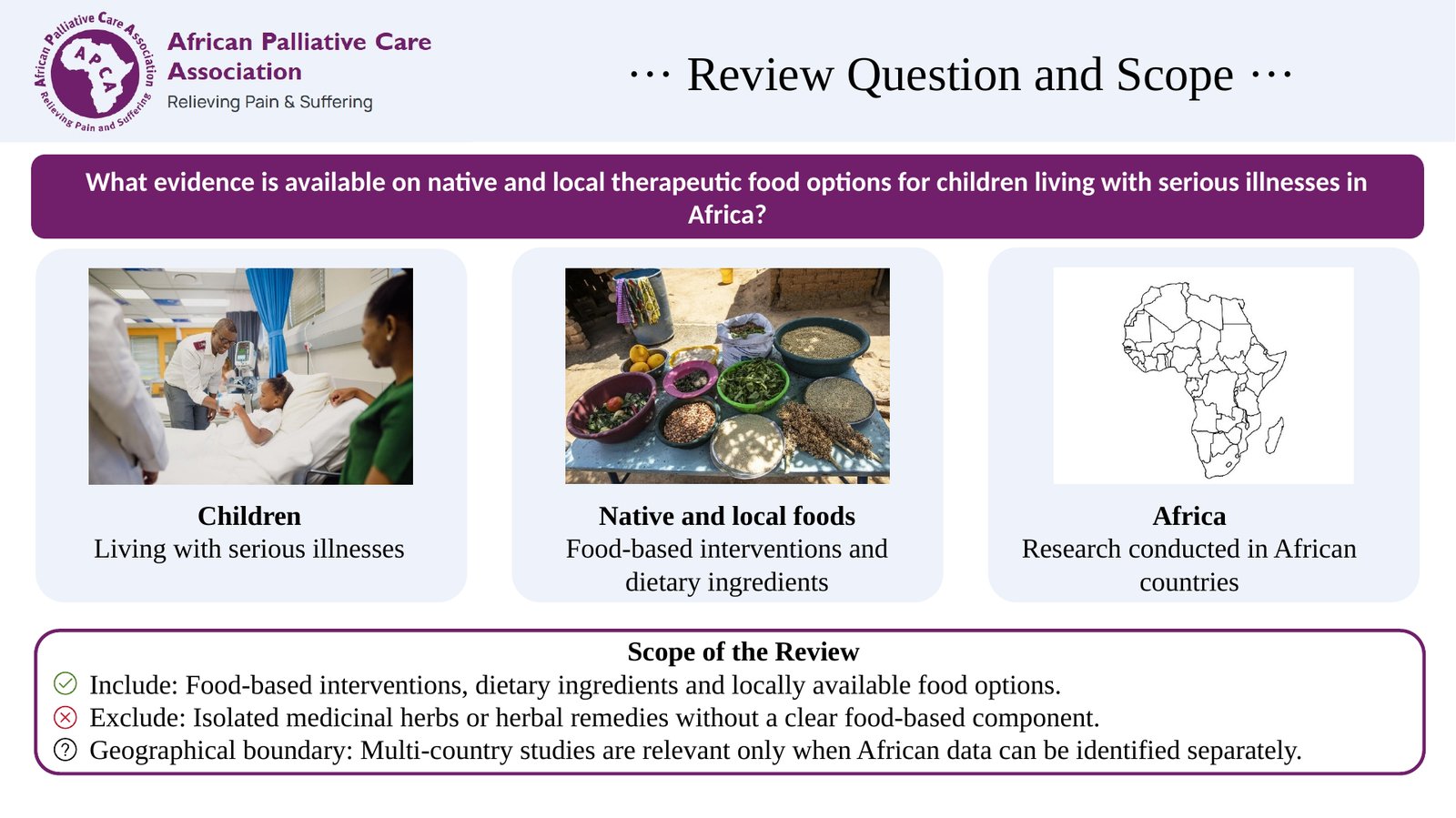
The review asked one question: what evidence is available on native and local therapeutic food options for children living with serious illnesses in Africa?
- Who: children and adolescents living with serious illnesses such as HIV, cancer, heart failure and renal failure.
- What: food-based interventions, dietary ingredients and locally available foods.
- Where: research carried out in African countries; multi-country studies only where African data could be separated out.
- Left out: isolated medicinal herbs or herbal remedies with no clear food component.
Drawing the line between a therapeutic food and a traditional medicine was one of the harder judgement calls, and it shaped which studies made it into the map.
How the 32 studies were found
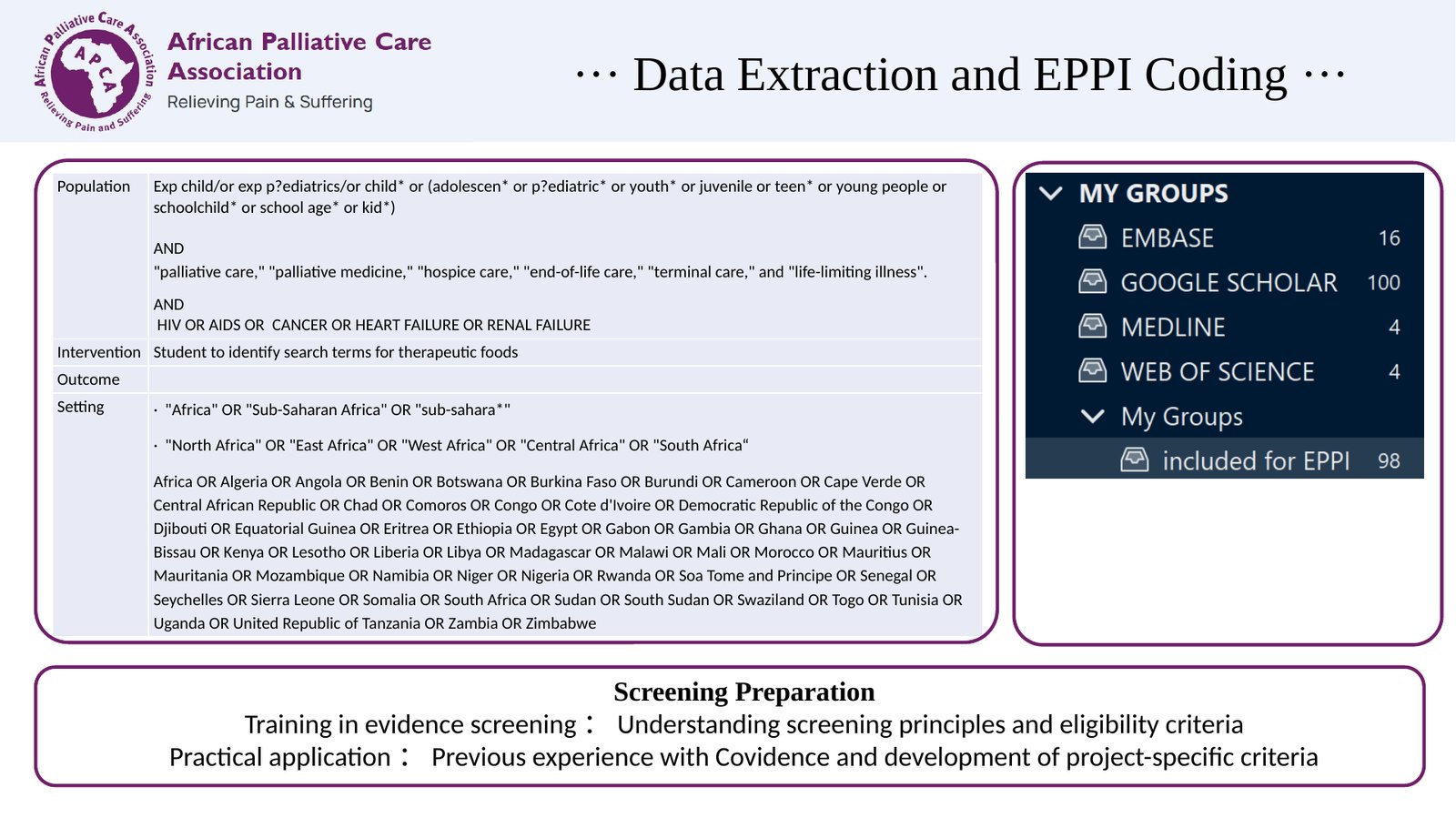
The search combined terms for children and young people, palliative and end-of-life care, the target illnesses, and every African country and region. Meng Xinyi drew on earlier training and hands-on experience with the Covidence screening platform, and set eligibility criteria specific to this project.
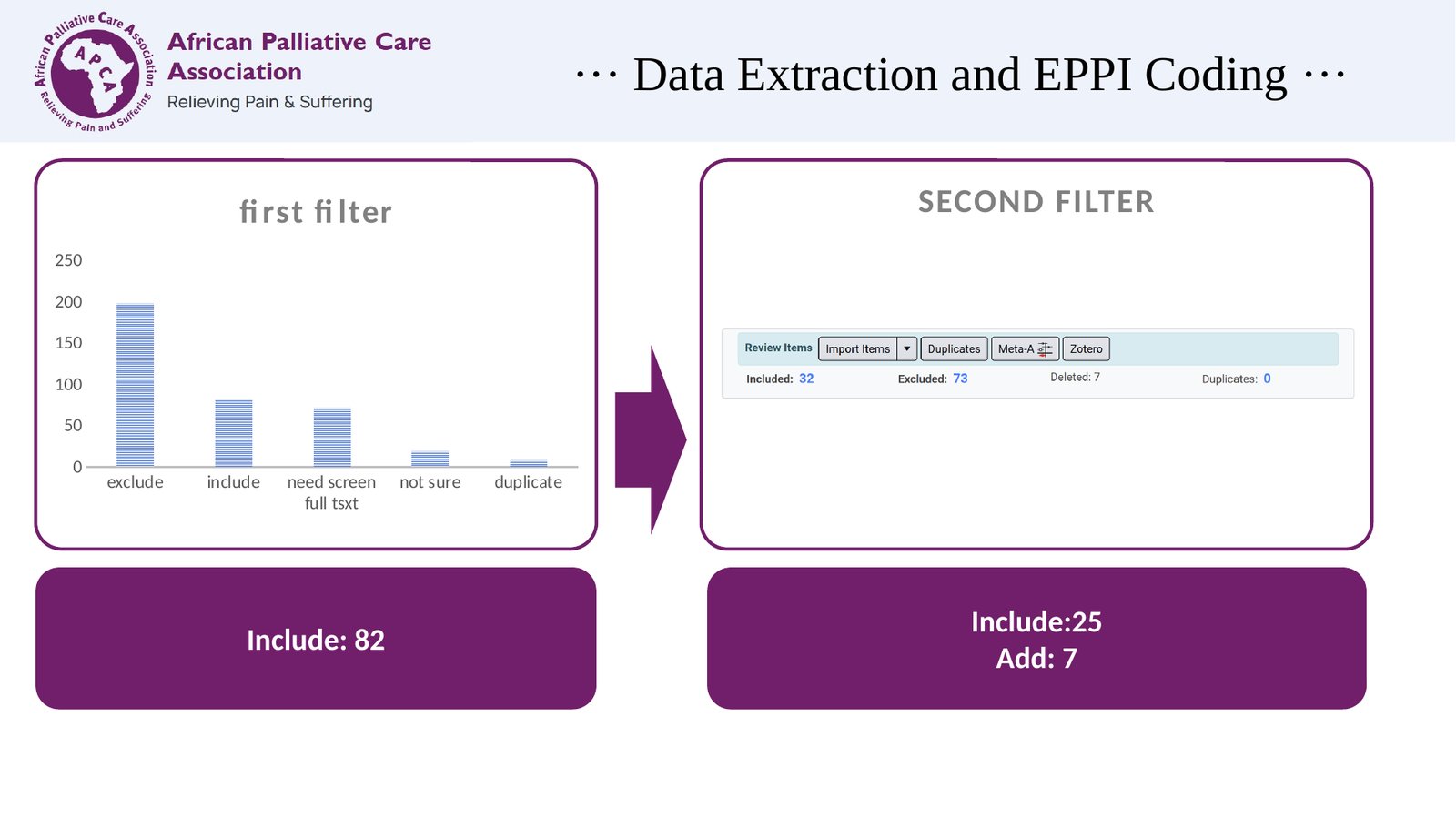
Screening ran in two rounds. The first round kept 82 studies. A closer second round narrowed these to 25. She then ran her own supplementary searches and found 7 more relevant studies, bringing the final dataset to 32.
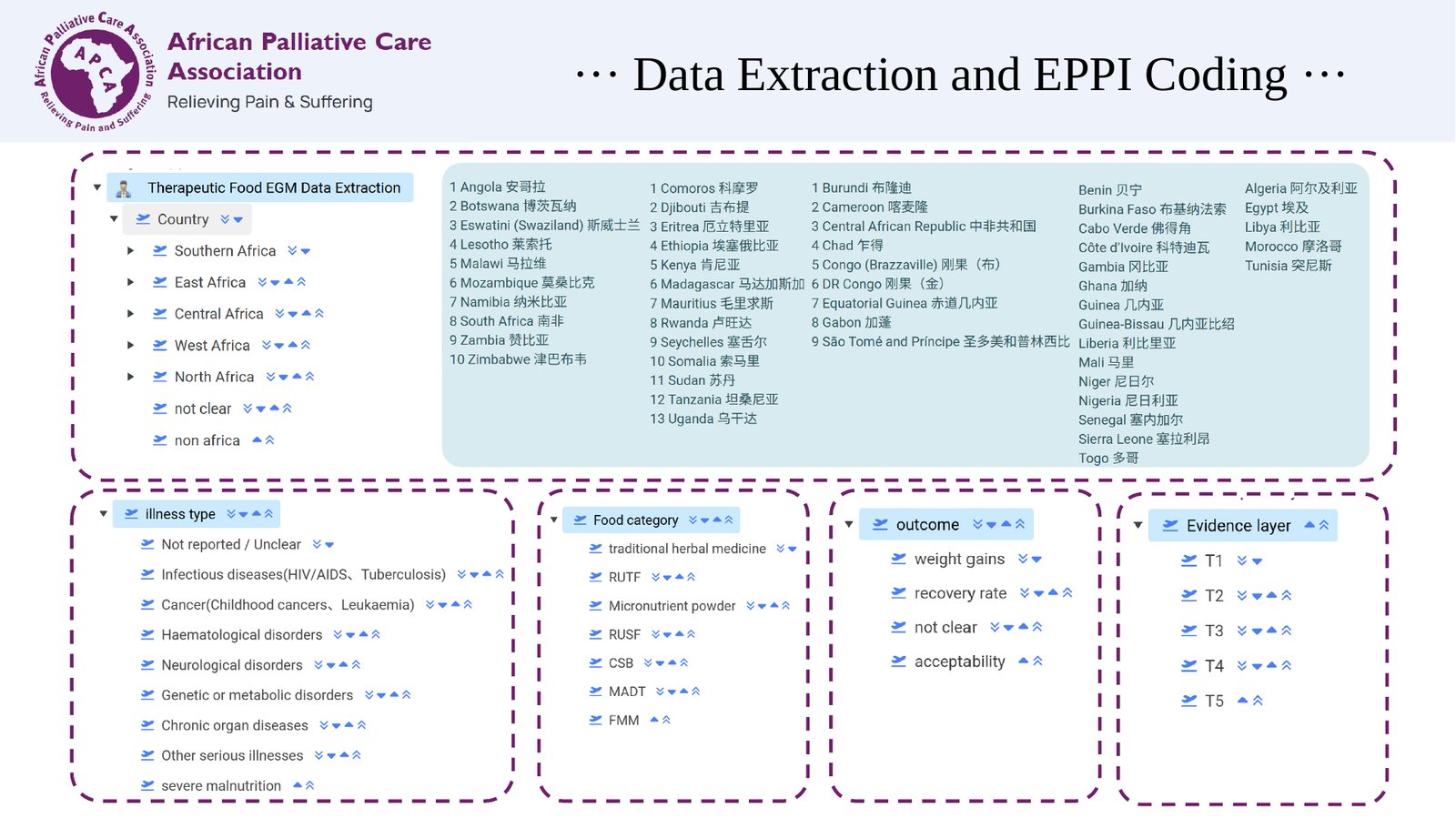
Each included study was then coded using the EPPI system, capturing details such as the country, the food category and the outcomes reported. The coded data then fed EPPI-Mapper, which produced an interactive Evidence Gap Map.
What the map shows
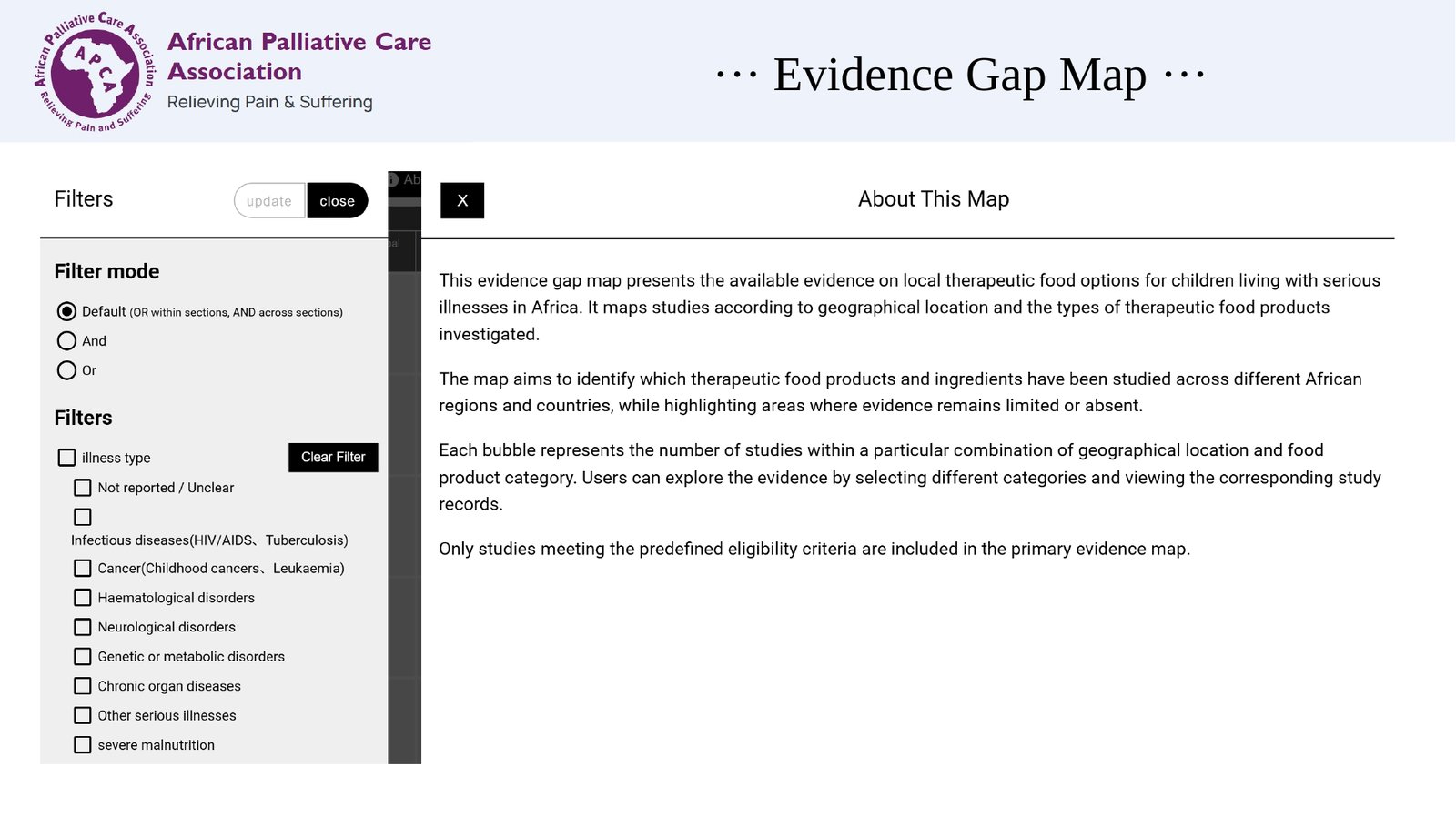
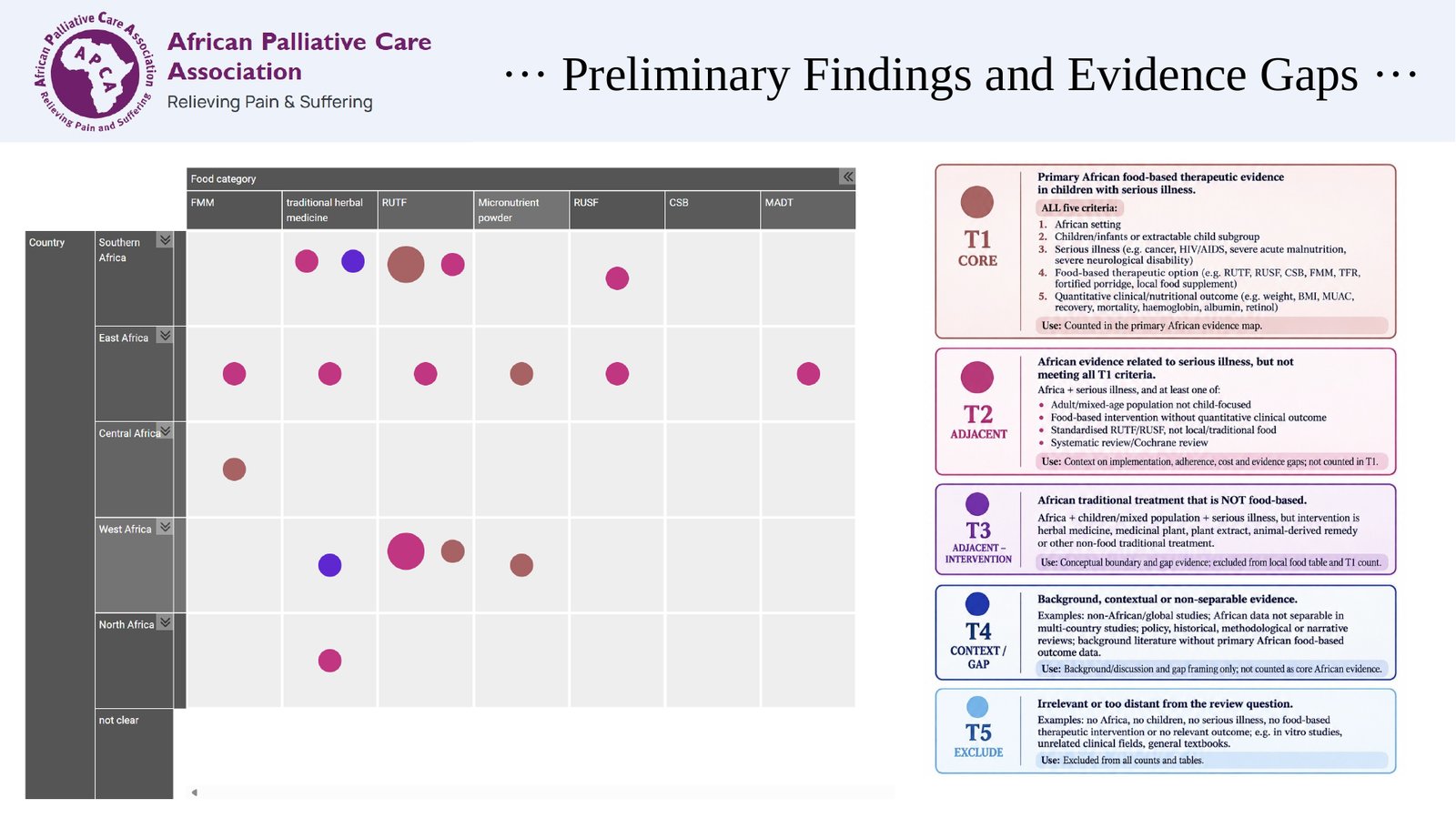
The Evidence Gap Map lays out how the 32 studies spread across African regions, food categories and reported outcomes. Its main message is about gaps: the research base is small, and it is unevenly spread across the continent.
Meng Xinyi was clear about what the map can and cannot do:
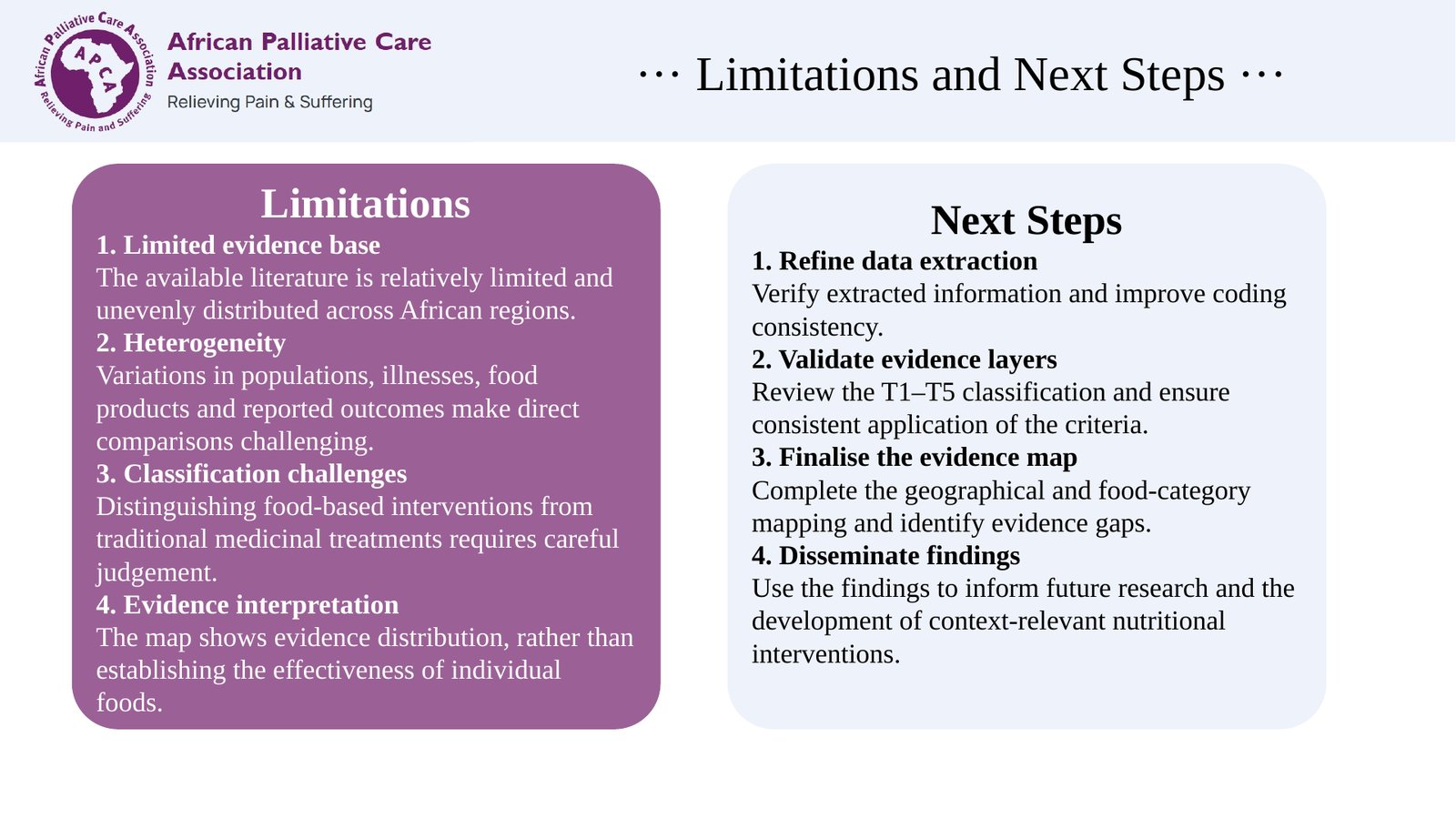
- It shows where evidence exists, not what works. The map does not prove that any single food is effective.
- The studies are hard to compare. They differ in the children studied, the illnesses, the food products and the outcomes measured.
- Classification takes judgement. Separating food-based support from traditional medicinal treatment was not always clear-cut.
What comes next
The map is a preliminary version. The next steps are to:
- Verify the extracted data and tighten coding consistency.
- Review the T1 to T5 evidence-layer classification so it is applied the same way to every study.
- Finish the geographical and food-category mapping.
- Share the findings to guide future research and the design of context-relevant nutrition interventions.
The presentation struck a chord with the team. APCA's Patricia Batanda said she agreed that nutrition in paediatric palliative care needs to be both researched and put into practice, and thanked Dr Eve for encouraging the study.
For her part, Meng Xinyi thanked Dr Eve for her continuous guidance and the APCA team for the opportunity, describing the internship as a valuable learning experience.


